By Emily Dalrymple, social media coordinator
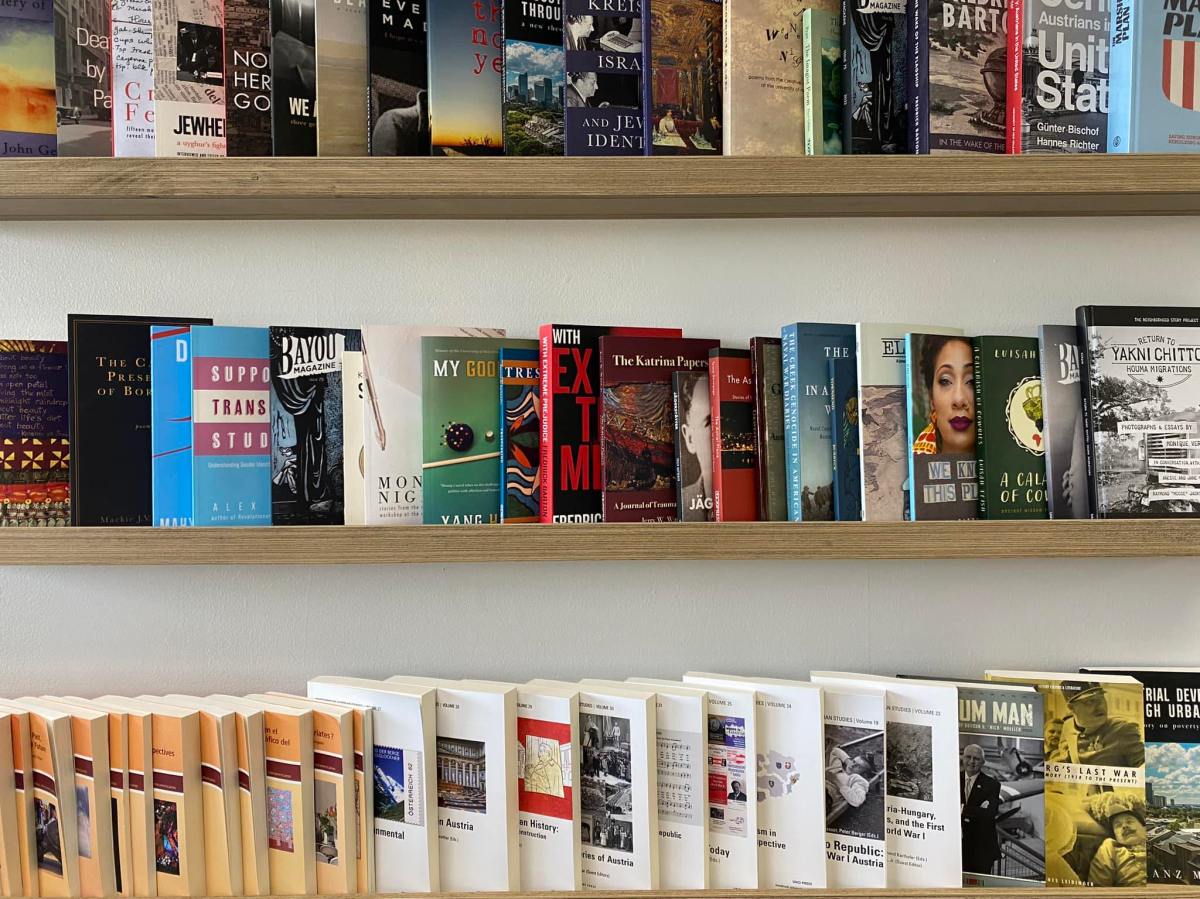
Publishers spend a lot of time looking at books. Books on the desk, the floor. Books inside boxes, drawers, and mailers. And if you gaze into a book for too long, the book also gazes into you. . . .
As the UNO Press social media coordinator, I spend a lot of time studying book covers. I ask myself: Which designs will catch the light? Which sleeves will transition into a smooth cover or profile image? Which piece of graphic art or photography will best depict the message of our post? Yet, book covers are much more than an aesthetic or marketing technique.
I recently read Jhumpa Lahiri’s The Clothing of Books and was surprised when her text conveyed exactly what I was feeling and thinking about book covers. She says, “The more I think about it, the more I am convinced that the cover is a sort of translation, that is, an interpretation of my words in another language—a visual one. It represents the text, but it isn’t a part of it. It can’t be too literal. It has to have its own take on the book” (23). Rather than characterizing the book cover as an accessory to the text, Lahiri considers the cover to be a way of reaching those who may not understand or “see” the initial language of a book. The cover is given an independent identity and purpose: “It has a presence, a power of its own” (26). The cover not only supports the written text but also shapes the overall impact of the words. Translating material into an accessible format cannot be understated.
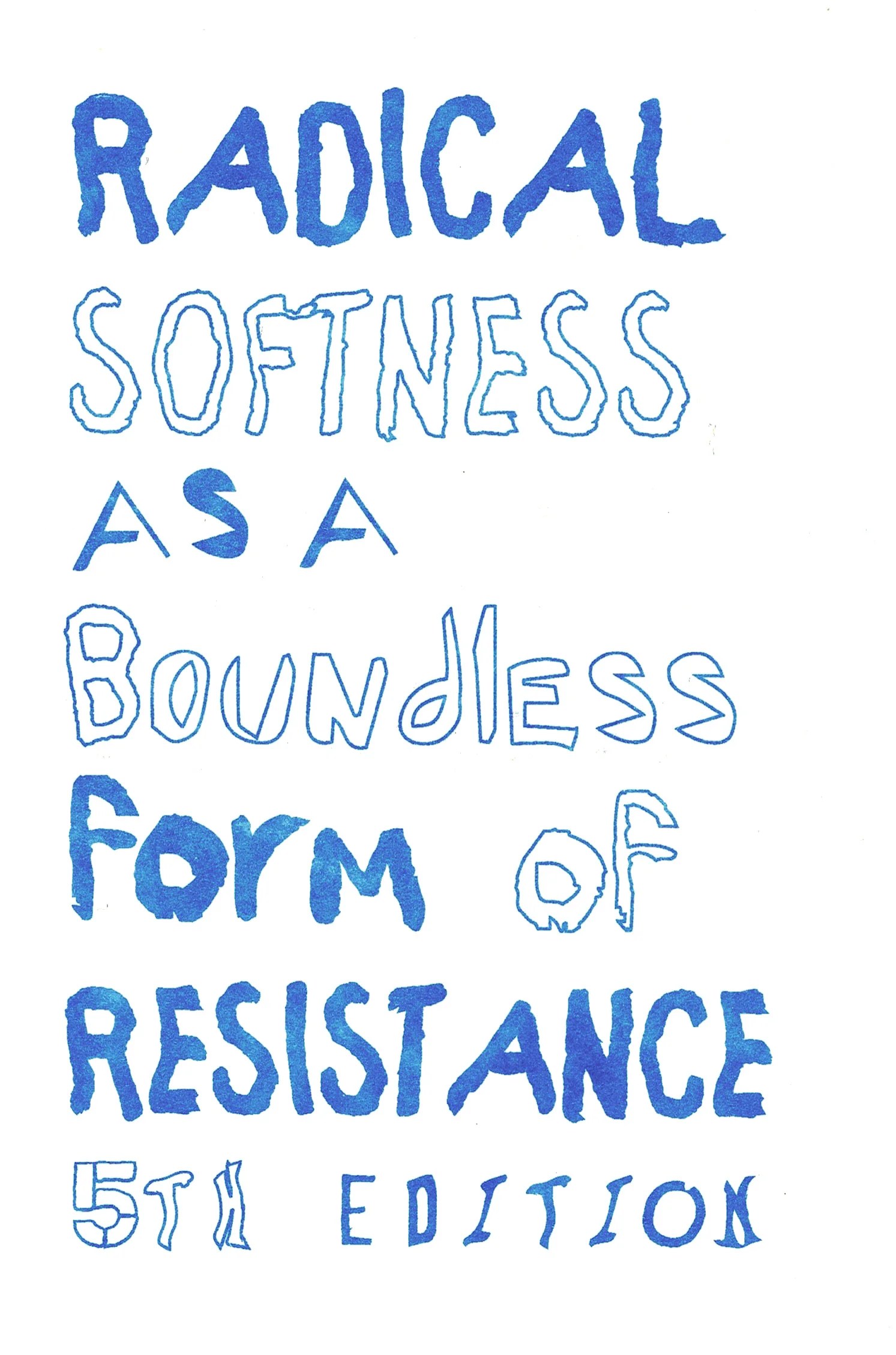
I also spend a lot of time thinking about the significance of physical media and what it means to hold a book in your hands. Lahiri quotes painter Richard Baker, who says that books “come to stand for various episodes in our lives, for certain idealisms, follies of belief, moments of love. Along the way they accumulate our marks, our stains, our innocent abuses—they come to wear our experience of them on their covers and bindings like wrinkles on our skin” (55–56). Be Oakley, author of Radical Softness as a Boundless Form of Resistance, says: “As a publisher I create content that in its very form is radically soft: the published materials/objects can be damaged easily by heavy use, water or excessive force. Their physical instability ironically problematizes assumptions about the firmness . . . of whatever ‘truth’ a text must convey” (48). Physical books, their bindings and covers, are “unstable”; they wear, tear, or disappear entirely. Yet their presence represents a softness, a commonality. We see our own “translation” and meaning in the physical presence and deterioration of a book cover.

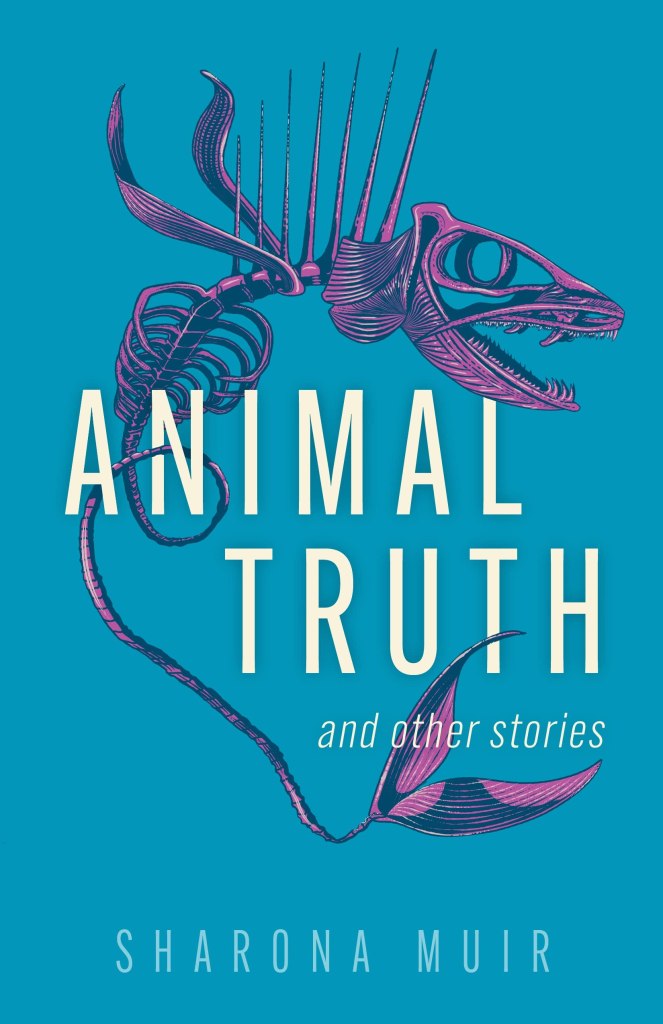
When I first began working with UNO Press, I was a graduate student enrolled in a collaborative course with the UNO Publishing Lab. By the time the course finished, the class had chosen the winning manuscript, met with the author, and submitted book cover ideas. The book was Sharona Muir’s collection Animal Truth and Other Stories, and our class wanted to capture the scientific and mythological themes of the text while hinting at the sometimes grotesque nature of the stories.
When I became a graduate assistant at the Press the next year, I was able to follow the design and editing process over the shoulder of our graphic designer Alex Dimeff. Using the suggestions from the class, Alex began researching animal and medical illustrations and combining those images to create the chimerical creature you now see on the cover. When the book was published later that season, it was rewarding to hold the printed copy in my hands. The design encapsulates the fantastic, but not altogether impossible, subjects of Muir’s writing. It draws the reader into the story before they even open to the first page.
As a graduate assistant, I read incoming manuscripts and researched comparable book covers, prioritizing the accessibility and “feel” of the image or photograph. When I read the first few chapters of Warren M. Billings’ upcoming monograph A Bayou Bar: The Louisiana State Bar Association, 1804–1941, I searched for book covers that would convey the historical and cultural significance of the Louisiana State Bar Association while maintaining the accessibility and “nearness” of the text. It was important to us that readers felt that this book was relevant to the participation in and organization of our current legislative moment.
As a social media coordinator, I do my best to highlight the diversity of our catalog. Book covers are paired with releases, events, collaborations, etc. Social media is an incredible form of outreach; it bridges the gap between the physical and digital interpretation of the book and centers the book cover in all its variations. This year, we’ve released several new or second editions of UNO Press titles, including Alex Myers’ Supporting Transgender Students, Monique Verdin’s Return to Yakni Chitto: Houma Migrations, and Moira Crone’s The Not Yet—all with brand new covers. As these books are released, we post them on social media, celebrating the opportunity to further “translate” these texts for our audiences.



UNO Press continues to collaborate with community-based authors, designers, and printers to make these book covers possible. We can’t wait to share our next visual story with you!
 Books Worth the Trees They're Printed On